Andy Cutting
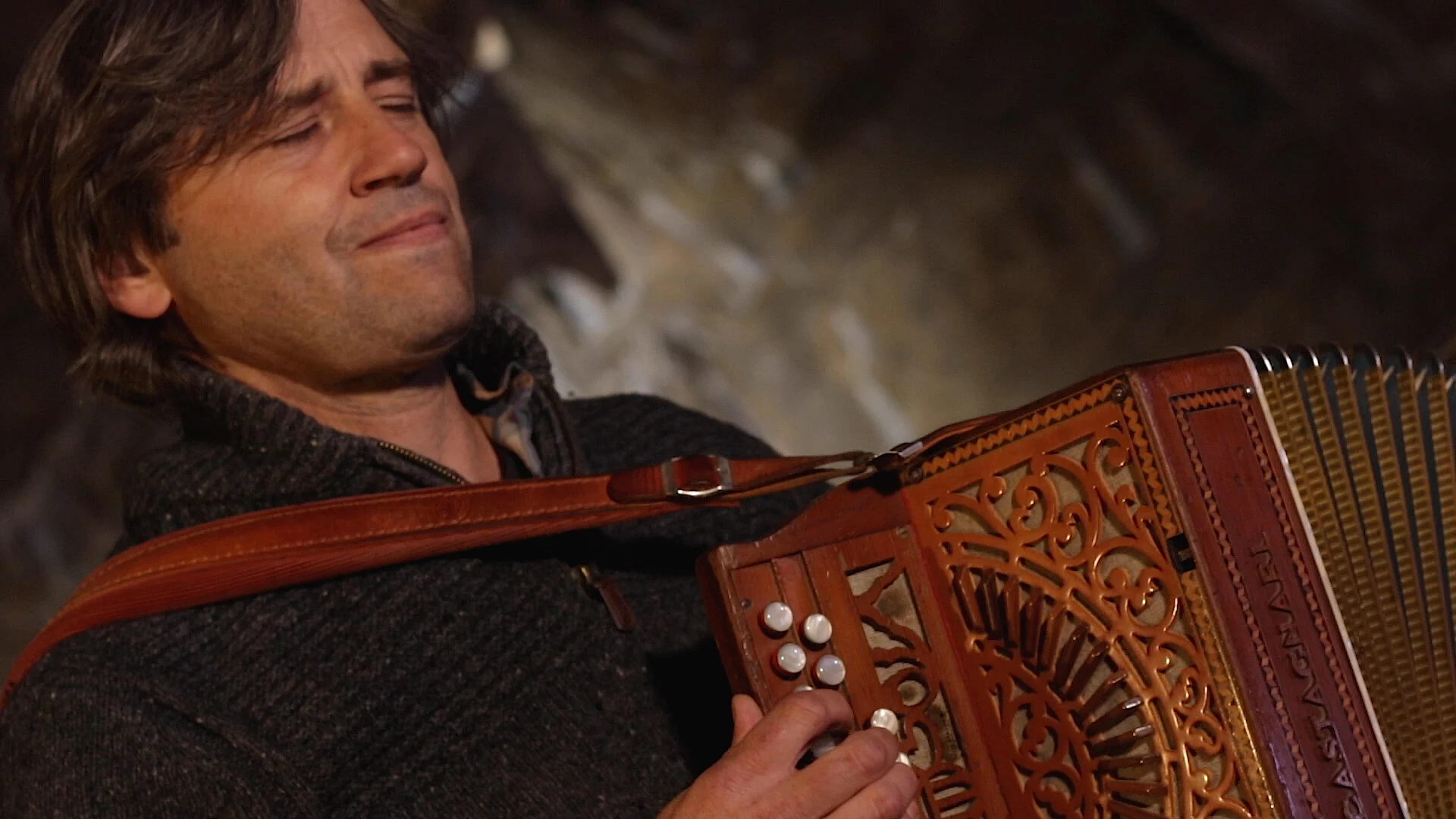
Andy Cutting is a diatonic accordion player from Derbyshire. When learning the diatonic accordion he would pick up tunes through the oral tradition, figuring out how to play tunes simply by listening to a piece of music and playing it back, which is portrayed in Andy’s emotional and relaxed playing. As well as having released and performed his own repertoire, Andy is also a member of multiple traditional English instrumental groups such as Leveret, performed with fiddle player Chris Wood as well as being one member of Simpson, Cutting, Kerr. However, not only does Andy focus on traditional English folk, he is also engrained in the traditional music from Quebec and Central France, which influences the tunes written and performed by the band Blowzabella (of which Andy is a founding member of).
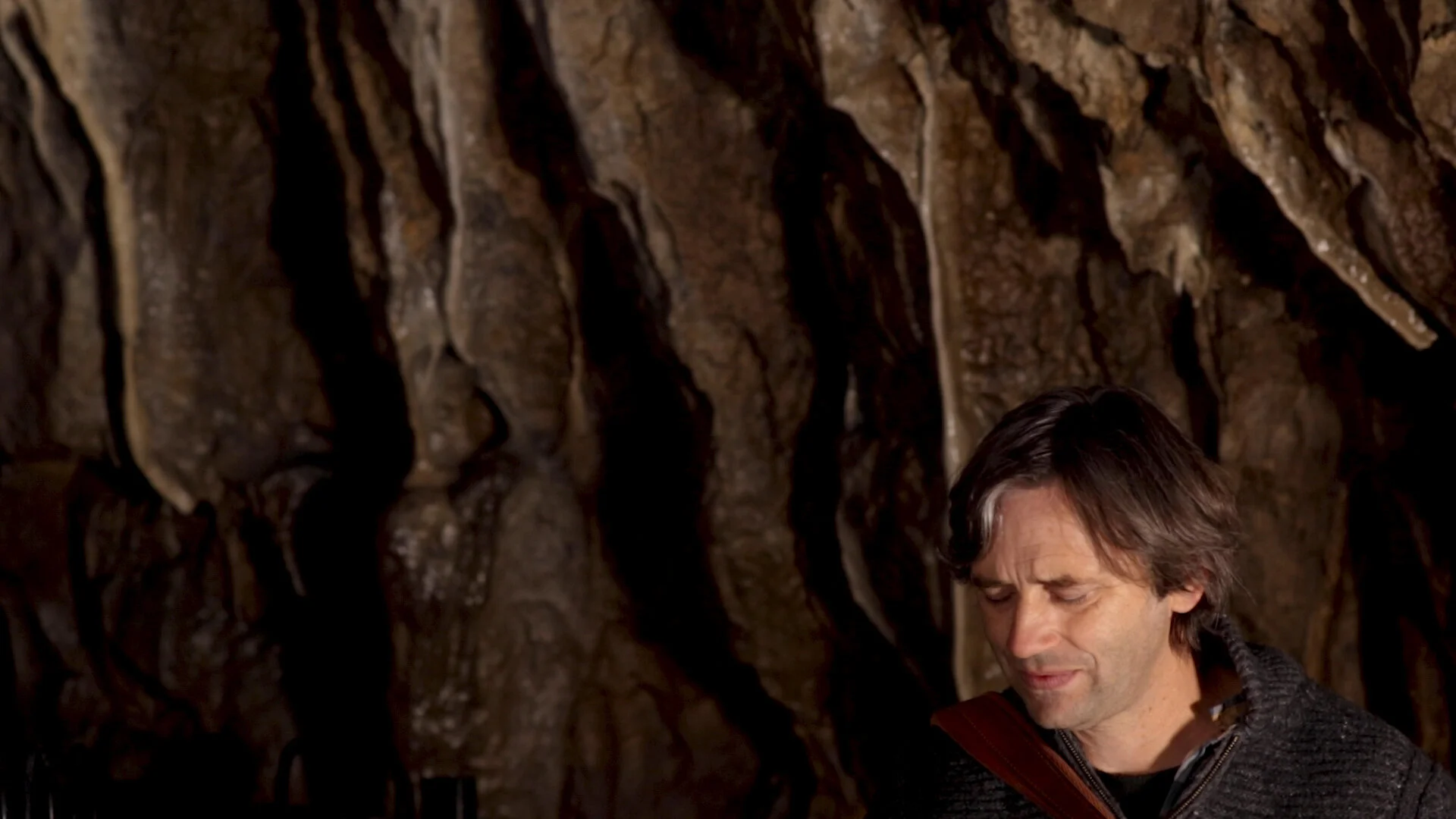
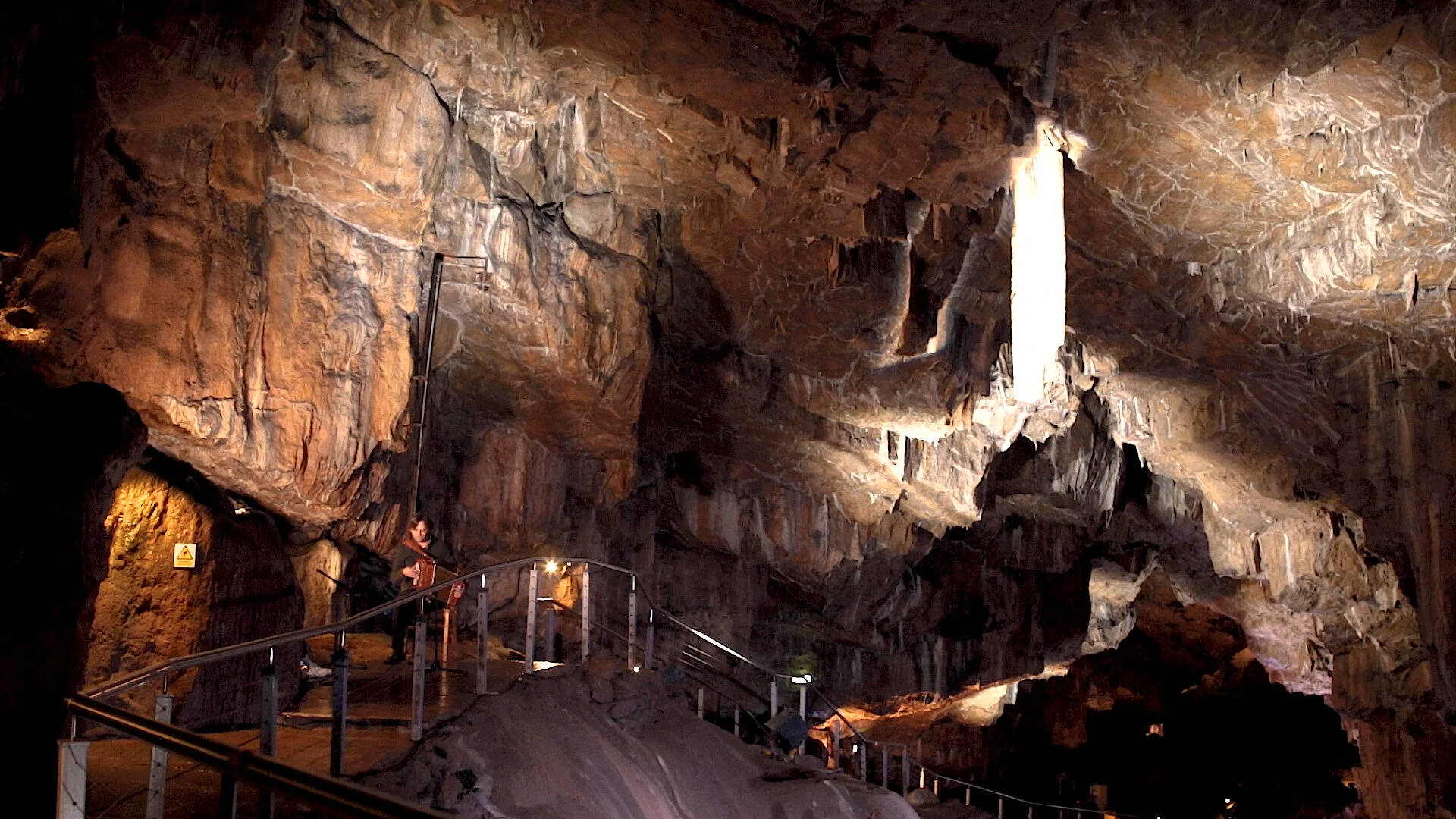
For this recording session, we went to Poole’s Cavern in Buxton, a show cave that is the home of England’s longest stalactite. Poole’s Cavern has been a popular attraction from as early as the 16th Century with the likes of Mary, Queen of Scots having visited in 1582 as well as being listed one of writer Charles Cotton’s “Wonders of the Peak” in 1681. From dodgy cavern guides in 1797 that would threaten to leave tourists in the cave without candle light in order to gain more income from the tour, to then be held under the custodianship of the Redfern family for 120 years, the cavern has a vast history that is ever being uncovered. In the modern day, Poole’s Cavern holds regular tours that are managed as a non for profit heritage and educational visitor attraction, led by tour guides (they won’t leave you without light) that have vast knowledge of the caves history.
During this session we recorded two sets with Andy. The first set was Hessian Camp (English trad.) and 3/2 Hornpipe Lady Grey that Andy was commissioned too compose. This set was recorded in the middle and most open part of the long cave.
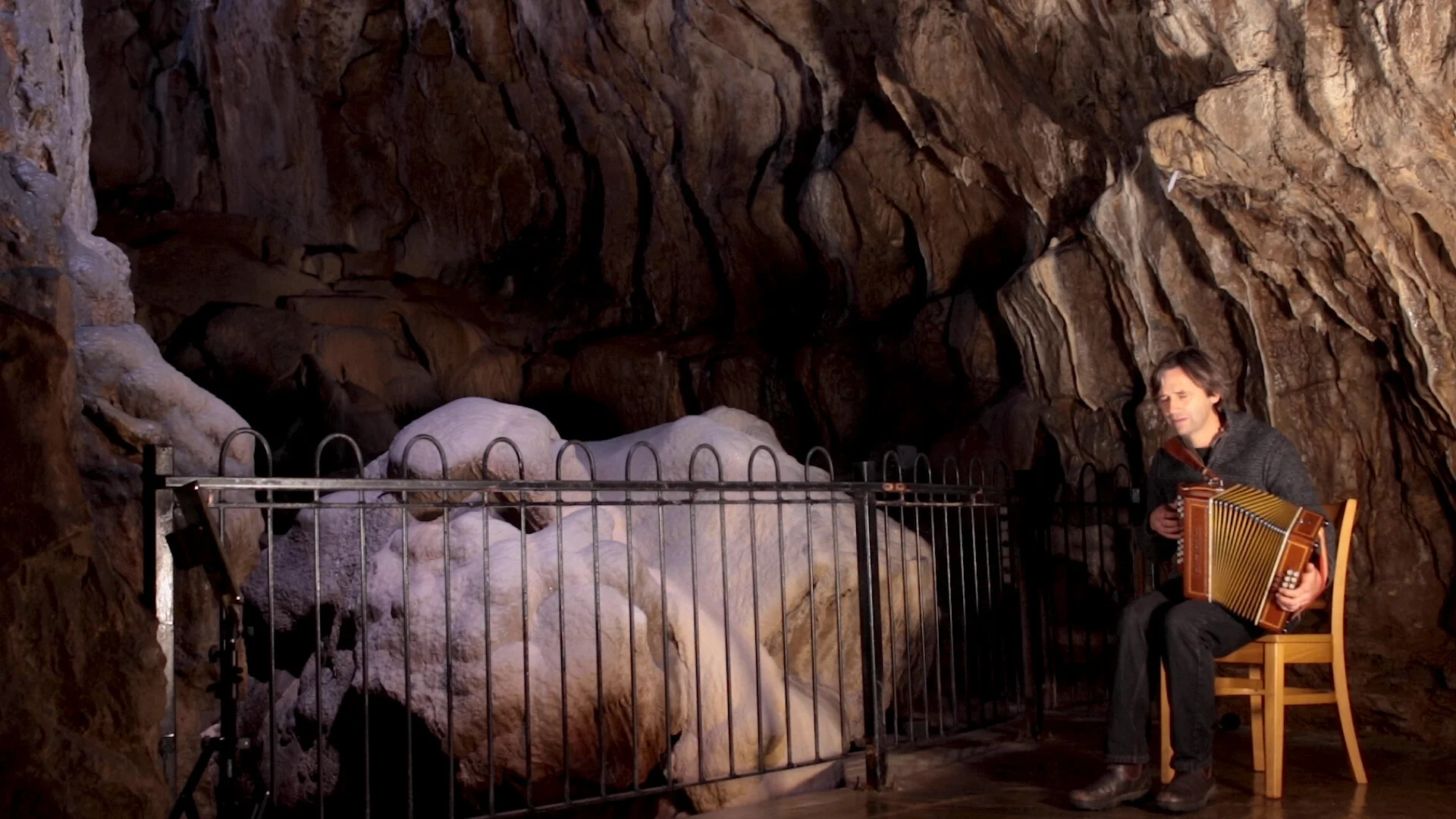
The second set was another tune Andy composed called The Abbess which we recorded at the end of the cavern next to a large limestone feature. We decided to record the performances in different areas of the cave to discover and compare how the sound differs due to the unevenness of the surrounding walls and the volume of the space in each area.